Lawn Fungicide Treatment
in Little Elm, Texas
Let's Figure Out What's Causing Those Brown Spots
Brown patches in your Little Elm lawn can be frustrating, especially when you're not sure what's causing them. Is it a fungus? Drought stress? Grubs? Something else entirely? Before you start throwing products at your lawn, let us help you identify the actual problem.
Brian Milliken is a TDA licensed applicator (License #0823737) and owner of North Texas Lawn Solutions. Brian lives right here in Little Elm, and has treated enough lawns in Paloma Creek, Lakeside, and throughout our neighborhoods to know what St. Augustine and Bermuda grass problems look like up close. When you call us, you get someone who can actually diagnose the issue and recommend the right treatment, not just guess and spray.
Call (214) 995-9369 to schedule a free lawn assessment in Little Elm.
For the full picture, see our complete fungicide treatment service for North Texas.
What Is Lawn Fungus?
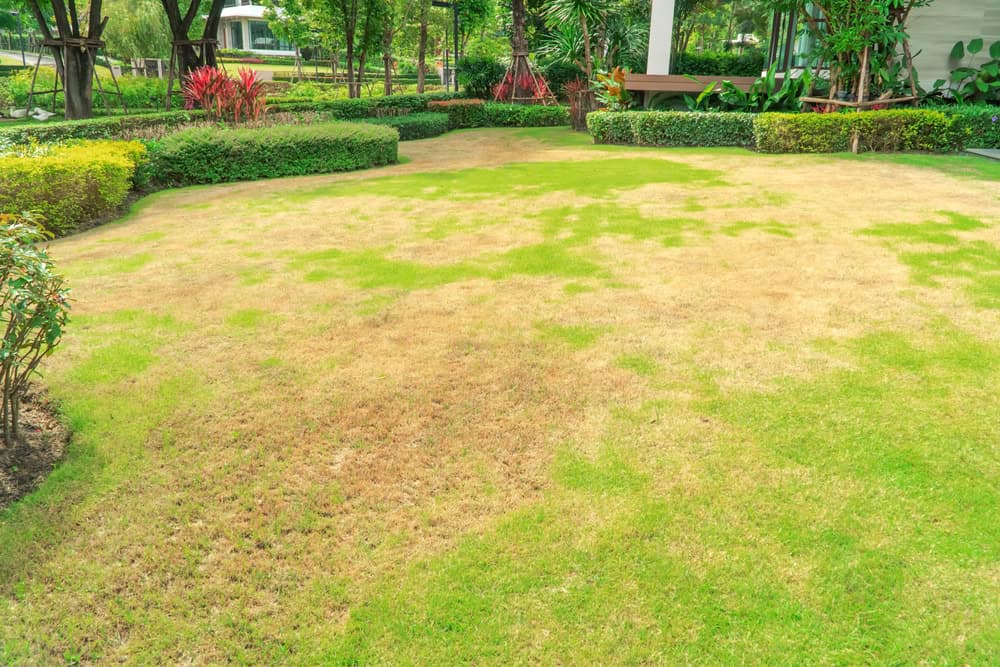
Lawn fungus is a disease caused by fungi that attack grass blades, roots, and crowns. In North Texas, the most common types are:
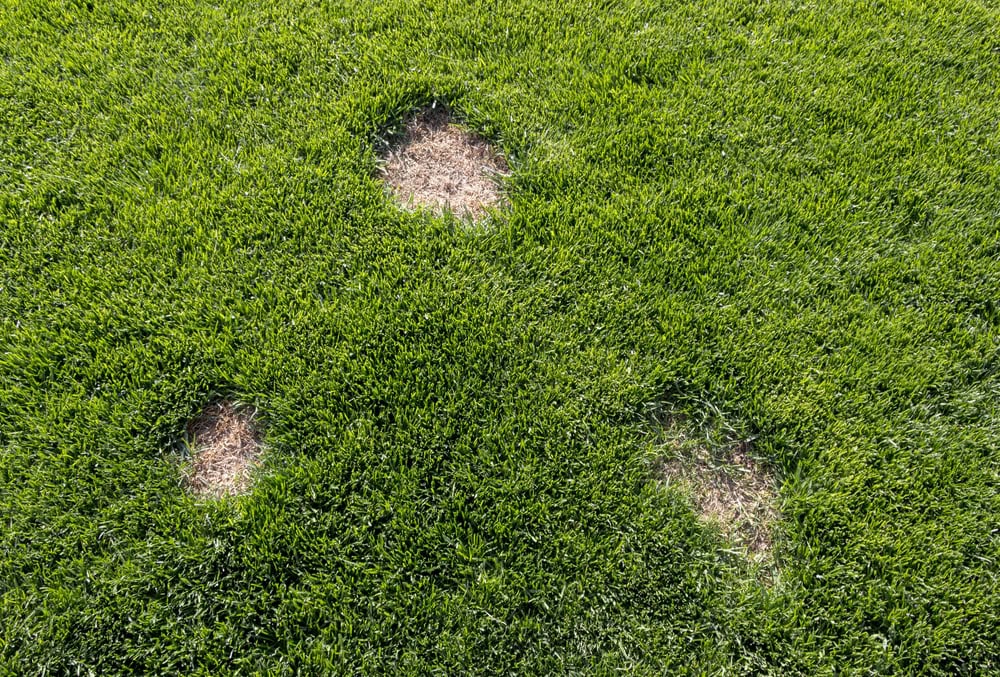
- Brown patch (Rhizoctonia): Circular brown spots with darker brown rings, typically 6 inches to several feet in diameter
- Large patch (similar to brown patch but affects St. Augustine more severely)
- Take-all patch: Yellow to brown irregular patches with dark roots
- Gray leaf spot: Small gray or tan lesions on grass blades
Here in Little Elm, brown patch and large patch are the most common culprits, especially during humid spring and fall weather. Our proximity to Lewisville Lake means we sometimes get higher humidity than Frisco or areas farther from water, which creates perfect conditions for fungal growth.
How to Tell If Your Lawn Has Fungus
Signs It's Fungus:
- Circular or irregular brown patches that appear suddenly
- Smoke ring (dark border around patch, visible early morning)
- Patches grow larger during humid weather
- Grass blades pull away easily from soil (weakened at base)
- Happens after periods of rain or heavy watering
Signs It's NOT Fungus:
- Brown patches in irregular patterns following landscape contours (often irrigation issues)
- Turf pulls up in sheets revealing white grubs underneath
- Yellowing grass in large areas (drought stress, nutrient deficiency)
- Brown spots near sidewalks/driveways in summer (heat stress)
- Dog spots (small, concentrated, very dark green rings around dead centers)
Why Little Elm Lawns Get Fungus
Little Elm has specific conditions that make lawn fungus more common:
Higher Humidity Near Lewisville Lake
Our proximity to the lake means morning dew lasts longer than in drier areas. Grass blades stay wet, creating ideal conditions for fungal spores to germinate.
New Construction Soil Issues
Many Little Elm neighborhoods like Paloma Creek and Lakeside have been developed recently. New construction soil is often compacted, poorly draining, and lacking organic matter, which stresses grass and makes it vulnerable to disease.
St. Augustine Grass Prevalence
St. Augustine is the most popular grass in Little Elm for its shade tolerance, but it's also highly susceptible to large patch fungus. If you have St. Augustine, you're at higher risk than Bermuda lawns.
Overwatering
Many homeowners water too frequently, especially during mild spring and fall weather. Wet grass overnight = fungus growth. We'll help you dial in your watering schedule based on current weather, not just guesswork.
How Fungicide Treatment Works
Step 1: Diagnosis
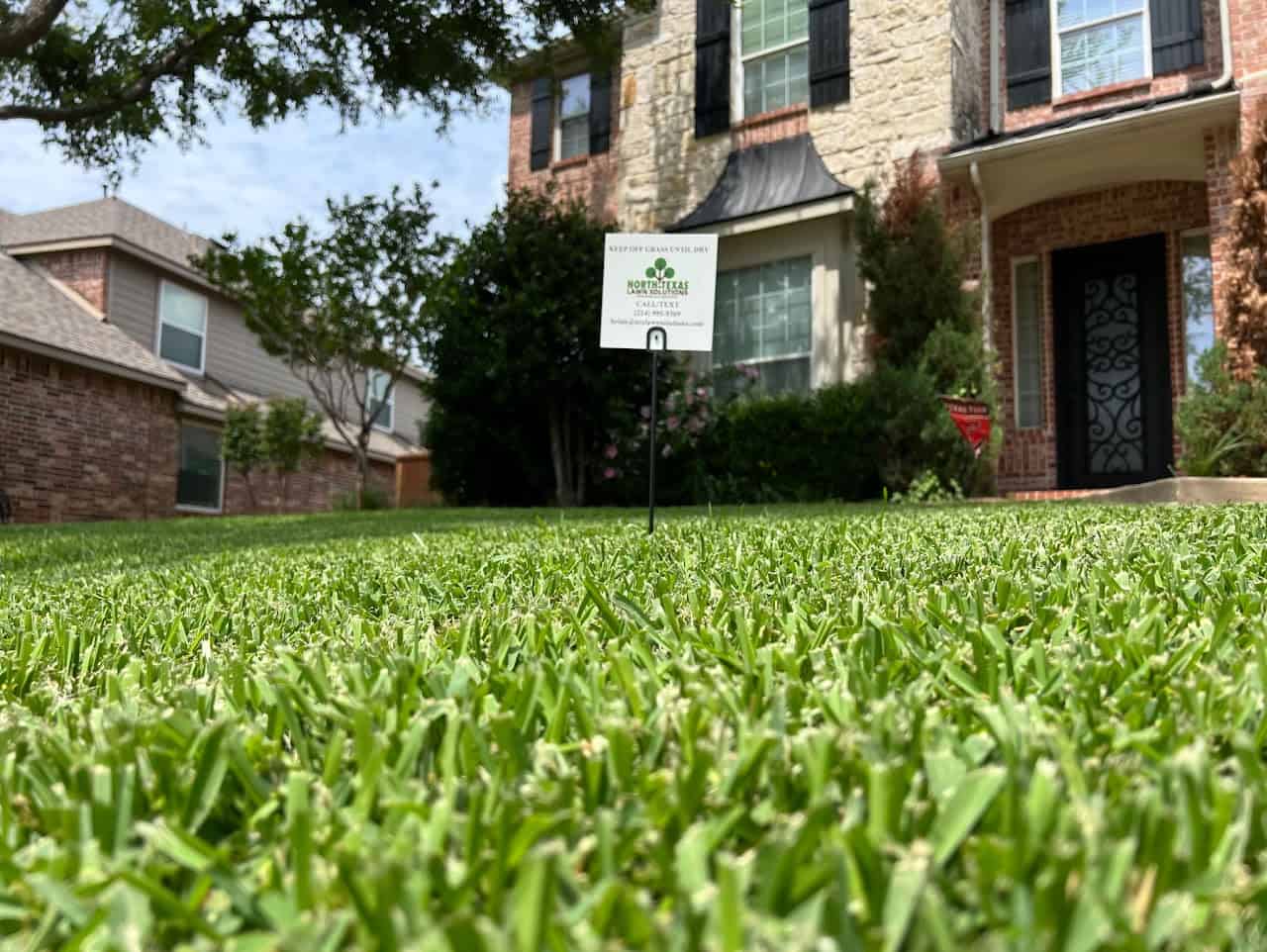
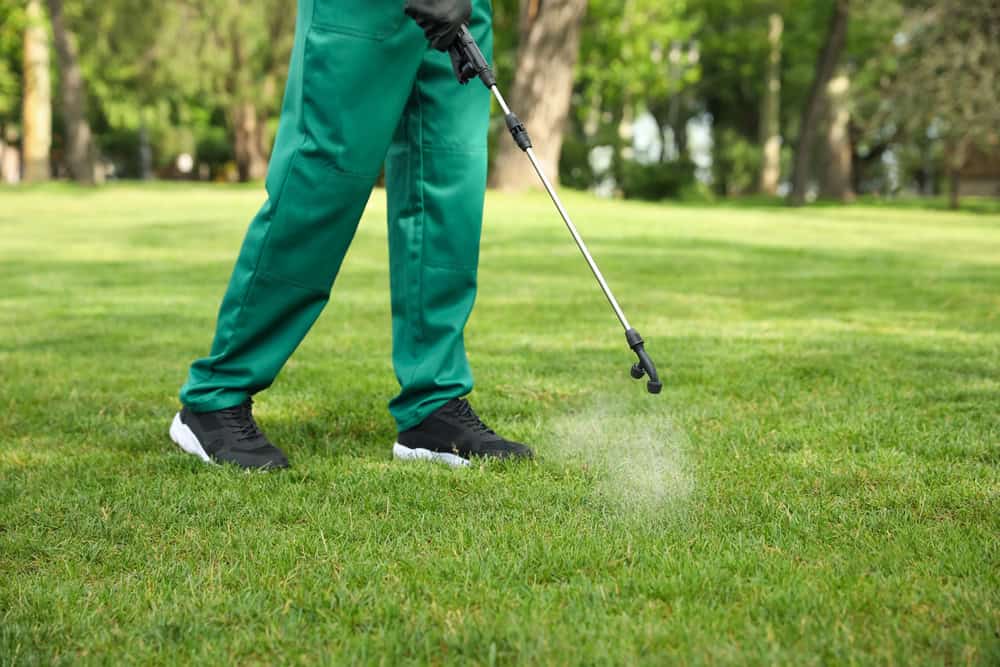
Step 2: Treatment Application
Step 3: Watering Instructions
Step 4: Follow-Up
(If Needed)
Step 5: Prevention Plan
When to Apply Fungicide in Little Elm
Late Spring
(April-May)
Early Fall (September-October)
Winter
(December-February)
Summer
(July-August)
The bottom line:
Why Fungicide Isn't Part of the 7-Treatment Program
Fungicide is not included in the standard 7-treatment program. Here's why:
The 7-treatment program focuses on fertilization, pre-emergent weed control, and post-emergent weed control. These are scheduled treatments that happen on a predictable timeline throughout the year.
Fungicide treatment is reactive and situational. We can't predict when your lawn will develop fungus (it depends on weather, irrigation, and lawn health), so it's applied as needed when outbreaks occur.
If we're at your house for a scheduled fertilization and we notice fungus, we will stop. We won't fertilize a lawn with active fungus because fertilizer makes it worse. Instead, we'll call or text you to explain what we see and recommend fungicide treatment first.
This is one way we're different from national chains. We won't "just put the product down regardless of the health of the lawn." If skipping a treatment is better for your lawn, we'll skip it.
If Fungus Appears Between Visits
Preventing Lawn Fungus
in Little Elm
1. Water in the Morning, Not Evening
Watering at night means grass stays wet for 8-12 hours, perfect for fungus. Water early morning (5-9 AM) so grass dries by afternoon.
2. Water Deeply, Less Often
Instead of daily light watering, water 2-3 times per week for longer periods. This encourages deeper roots and reduces surface moisture.
3. Improve Drainage
If you have low spots where water pools, consider leveling with topsoil or core aeration (We don't offer aeration, but we can recommend local companies).
4. Mow at Proper Height
- St. Augustine: 3-4 inches
- Bermuda: 1-2 inches
Mowing too short stresses grass and makes it vulnerable to disease.
5. Don't Over-Fertilize
Excessive nitrogen creates soft, lush growth that's more susceptible to fungus. Our 7-treatment program uses balanced fertilization timed for North Texas seasons.
6. Treat Fungus Early
Small outbreaks are easier and cheaper to treat. If you see brown spots appearing, don't wait. Call us at (214) 995-9369 and we'll come out the same day or next day to assess.
What Happens If You Don't Treat Fungus?
Brown patch and large patch won't necessarily kill your entire lawn, but they can cause significant damage if left untreated:
- Patches expand during favorable conditions (humidity, warm nights)
- Grass roots weaken, making turf more susceptible to other stresses (drought, heat, insects)
- Thin, patchy lawn requires overseeding or sodding to repair
- Fungus returns year after year in the same spots if conditions remain favorable
In severe cases, especially with St. Augustine large patch, you can lose large sections of turf that need to be replaced with sod. Treating fungus early prevents expensive repairs.
Fungicide Treatment Pricing & Plan
Fungicide treatment cost depends on the size of the affected area and the type of fungicide used. We'll provide a free quote after assessing your lawn.
Here's what you can expect:
- Small outbreak (100-300 sq ft): $75-$150
- Moderate outbreak (300-1,000 sq ft): $150-$300
- Large outbreak (1,000+ sq ft): $300+
Pricing varies based on the product used, number of applications needed, and total square footage treated. We'll always tell you the cost upfront before starting treatment.
Multiple treatments may be necessary if weather stays humid or if the fungus is severe. We'll let you know if follow-up is recommended.
No contracts required. You're not locked into anything. If your lawn needs fungicide, we'll treat it. If it doesn't need it, we'll tell you that too.
Get a free lawn assessment: Call (214) 995-9369 or text us directly. We'll come out, diagnose the problem, and give you a straight answer about what's going on and how much treatment will cost.
Frequently Asked Questions
Brown patch fungus is caused by Rhizoctonia solani, a fungus that thrives in warm, humid conditions. It spreads through water, wind, mowing equipment, and foot traffic. In Little Elm, brown patch typically appears in late spring and early fall when we have warm days, cool nights, and high humidity from morning dew and proximity to Lewisville Lake.
The fungus attacks grass blades and crowns, weakening the plant. St. Augustine and tall fescue are most susceptible. Bermuda grass can get brown patch but usually recovers faster.
Conditions that favor brown patch:
- Nighttime temperatures 60-75°F
- High humidity or prolonged leaf wetness
- Excessive nitrogen fertilization
- Poor air circulation
- Compacted soil or poor drainage
Prevention is the best defense against brown patch. Here's what we recommend for Little Elm lawns:
Water early in the morning (5-9 AM) so grass blades dry by afternoon. Avoid evening watering, which keeps grass wet overnight.
Water deeply, less often (1-1.5 inches per week total, including rain). Deep watering encourages root growth and reduces surface moisture.
Mow at proper height: St. Augustine 3-4 inches, Bermuda 1-2 inches. Don't remove more than 1/3 of blade height in one mowing.
Improve drainage in low spots where water pools. Core aeration helps if soil is compacted.
Follow a balanced fertilization program. Our 7-treatment program times nitrogen application to avoid excessive growth during peak fungus season.
Treat early if you see symptoms. Small outbreaks are easier to control than large ones.
If your lawn gets brown patch repeatedly in the same spots, we can apply a preventative fungicide in spring and fall before outbreaks occur.
No, fungicide is not included in the 7-treatment program. Here's why:
The 7-treatment program includes:
- Pre-emergent herbicides (prevent weeds before they sprout)
- Post-emergent herbicides (kill existing weeds)
- Fertilization (4 applications timed for North Texas growing seasons)
These are scheduled, preventative treatments that happen on a predictable timeline throughout the year.
Fungicide is reactive and situational. We can't predict when your lawn will develop fungus because it depends on weather, irrigation, and lawn health. Fungicide is applied as needed when outbreaks occur.
Here's what makes our approach different:
If we arrive at your house for a scheduled fertilization and notice fungus, we will stop and call you. We won't fertilize a lawn with active fungus because fertilizer (especially nitrogen) makes fungus worse. Instead, we'll recommend fungicide treatment first, then resume fertilization once the fungus is under control.
Most national lawn care companies "just put the product down regardless of the health of the lawn." We don't do that. If skipping a treatment is better for your lawn, we'll skip it.
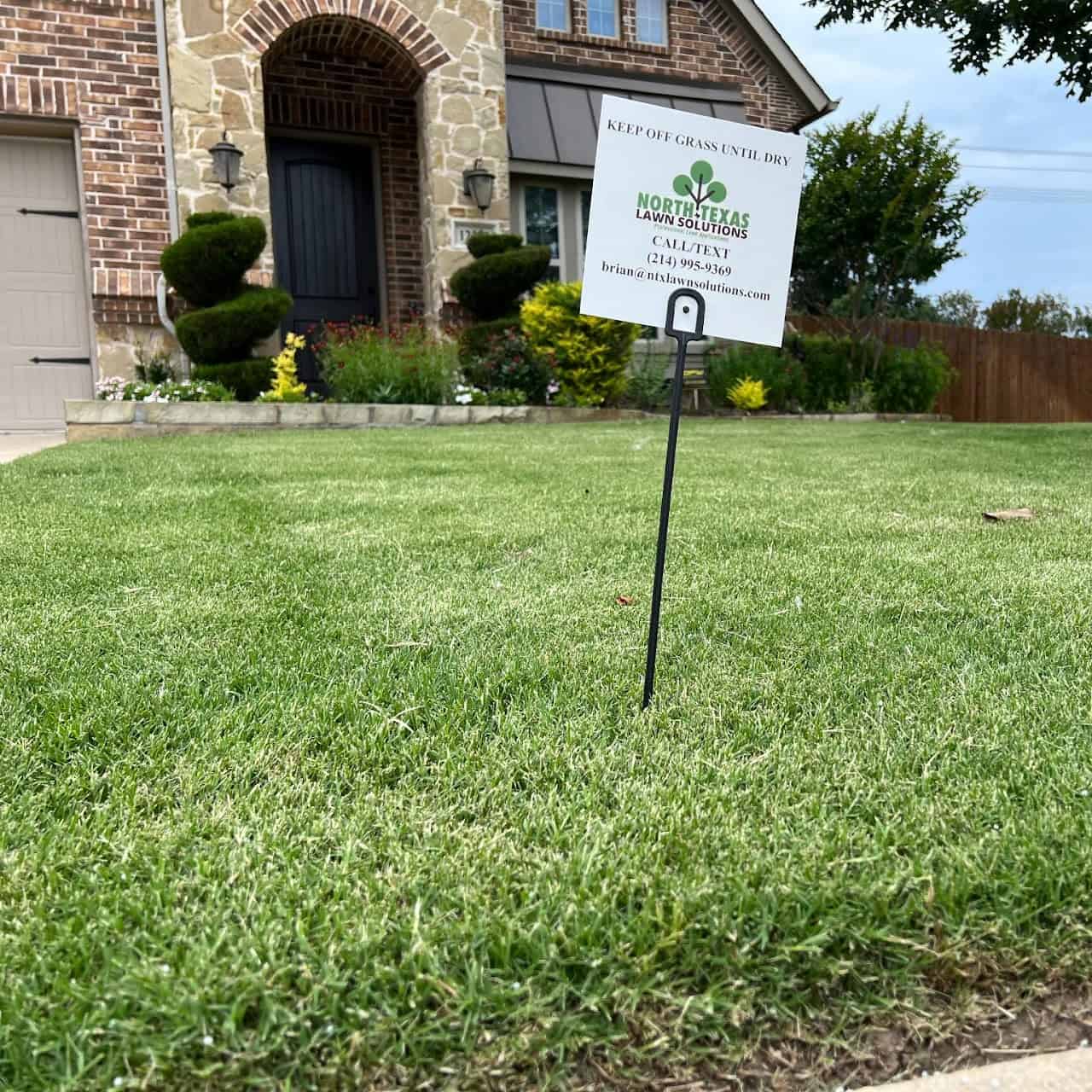
Get a Free Lawn Assessment Today
If you're seeing brown spots in your Little Elm lawn and you're not sure what's causing them, don't guess. Let us come out and diagnose the problem for free.
Call (214) 995-9369 or text us directly. We'll schedule a time to visit your property, identify whether it's fungus or something else, and give you a straight answer about the best treatment.
No high-pressure sales. No call centers. Just a licensed lawn care professional who lives in your community and wants to help you figure out what's going on.
You'll talk to Brian directly, not a call center. Brian answers his phone or calls back as soon as he can.
Let's figure out what's causing those brown spots and get your Little Elm lawn back on track.