
Lawn Insect Control
in North Texas
Fire Ants: The Most Persistent Lawn Pest
Why Fire Ants Are a Problem
Fire ants are more than just annoying. They're aggressive, their stings are painful, and once they establish colonies in your yard, they spread fast. Fire ant mounds pop up overnight, especially after rain, and a single colony can have multiple queens producing thousands of ants.
For homeowners with kids or pets, fire ants are a safety concern. Children playing in the yard, dogs digging in the grass, and even adults mowing the lawn can accidentally disturb a mound and get swarmed. Fire ant stings cause burning pain (hence the name), and some people have allergic reactions.
Identifying Fire Ants
What they look like: Small reddish-brown ants (1/8 to 1/4 inch long) that move aggressively when their mound is disturbed.
Where they live: Fire ants build mounds in open, sunny areas of your lawn. Mounds can be 12 to 18 inches wide and are often dome-shaped without a center opening. They also nest under pavers, along foundations, and near irrigation systems.
Peak season: Active year-round in Texas, but most visible in spring and fall when temperatures are moderate. Mounds multiply after rain.
Fire Ant Control Approach
Effective fire ant control requires treating both the mounds you see and the colonies you don't. Brian uses a combination approach:
- Broadcast treatment: Covers the entire lawn to target foraging ants and hidden colonies
- Mound treatment: Direct application to visible mounds for faster knockdown
- Preventative barrier: Reduces reinfection from neighboring properties
This multi-step approach works better than store-bought mound treatments, which only kill the ants you see without eliminating queens or satellite colonies.
Our 1-Year Fire Ant Guarantee
Fire ant control from North Texas Lawn Solutions comes with a 1-year guarantee. If fire ants return within one year of treatment, Brian will come back and spot treat those mounds at no additional charge. This guarantee reflects confidence in the treatment method and Brian's commitment to solving the problem, not just making a quick sale.
Learn more:
Fire Ant Control in Frisco
Fire Ant Control in Little Elm
Grubs: Hidden Damage You Don't See Coming
What Are Grubs?
Grubs are the larval stage of June beetles (also called June bugs or May beetles). These white, C-shaped larvae live in the soil and feed on grass roots from late spring through fall. By the time you notice brown patches in your lawn, grubs have already caused significant damage.
Identifying Grub Damage
What it looks like: Irregular brown patches that appear in summer, usually in sunny areas of the lawn. The grass feels spongy when you walk on it, and you can peel back sections of dead turf like a carpet because the roots have been eaten away.
How to confirm: Peel back a section of damaged turf. If you see 5 or more white, C-shaped grubs per square foot, you have a grub problem that needs treatment.
Common confusion: Grub damage looks similar to drought stress (both cause browning in summer), but drought-stressed grass roots are intact. Grub-damaged grass has no roots and lifts easily from the soil.
Grub Life Cycle and Treatment Timing
Understanding the grub life cycle is key to effective control:
May to July: Adult beetles lay eggs in the soil. Eggs hatch into tiny grubs that begin feeding on grass roots. This is the best time for preventative treatment because grubs are small and easier to kill.
August to September: Grubs grow larger and feed aggressively. Damage becomes visible. This is when curative treatment is needed if you didn't apply preventative control.
October to winter: Grubs burrow deeper into the soil to overwinter. They're harder to treat at this stage.
Spring: Grubs move back toward the surface to feed briefly before pupating into adult beetles. Another treatment window, but less common.
Preventative vs. Curative Treatment
Preventative grub control (recommended): Applied in May or June before damage occurs. This approach protects your lawn investment and avoids the cost of reseeding damaged areas.
Curative grub control: Applied after damage is visible (usually August or September). Stops further damage but doesn't repair existing brown patches. You'll need to water heavily and wait for grass to regrow, or reseed damaged areas.
Brian recommends the preventative approach for homeowners who've had grub problems before or who want to avoid the stress of watching their lawn turn brown mid-summer.
Chinch Bugs: Tiny Pests, Big Damage
What Are Chinch Bugs?
Chinch bugs are small (1/6 inch long), black insects with white wings that feed on grass blades and stems. They suck out plant juices, inject toxic saliva, and cause grass to yellow, then brown, then die. Chinch bugs thrive in hot, dry conditions and are most active in July and August.
Identifying Chinch Bug Damage
What it looks like: Yellowing grass that progresses to brown patches, usually starting in sunny, dry areas near driveways, sidewalks, or south-facing slopes. Damage spreads outward in irregular patterns.
How to confirm: Part the grass at the edge of a damaged area and look at the soil surface and grass stems. You'll see tiny black bugs with white wings moving around. They're most visible on hot, sunny days.
Common in: St. Augustine grass lawns. Chinch bugs love St. Augustine and can decimate it quickly during Texas summers.
Chinch Bug Control
Chinch bug control requires:
- Fast treatment: These bugs reproduce quickly, so early intervention prevents widespread damage.
- Thorough coverage: Broadcast application across affected areas and surrounding grass.
- Watering after treatment: Helps move the insecticide down to where chinch bugs are feeding.
Unlike grubs (which have a clear preventative window), chinch bugs are typically treated when damage appears. Brian can assess your lawn, confirm chinch bugs are the problem (not drought, fungus, or other issues), and treat accordingly.
Peak Season: July and August
Chinch bug populations explode during hot, dry weather. If your lawn starts showing stressed, yellowing patches in mid-summer and you're watering adequately, chinch bugs are a prime suspect.
Army Worms: Fast-Moving Lawn Destroyers
What Are Army Worms?
Army worms are caterpillars (moth larvae) that move across lawns in large groups, devouring grass as they go. They're called "army worms" because they travel in masses and can strip a lawn bare within days.
Identifying Grub Damage
What it looks like: Irregular brown patches that appear in summer, usually in sunny areas of the lawn. The grass feels spongy when you walk on it, and you can peel back sections of dead turf like a carpet because the roots have been eaten away.
How to confirm: Peel back a section of damaged turf. If you see 5 or more white, C-shaped grubs per square foot, you have a grub problem that needs treatment.
Common confusion: Grub damage looks similar to drought stress (both cause browning in summer), but drought-stressed grass roots are intact. Grub-damaged grass has no roots and lifts easily from the soil.
Identifying Army Worm Damage
What it looks like: Large areas of grass chewed down to the ground, leaving only stems. Damage appears suddenly (seemingly overnight) and spreads rapidly. You might notice birds flocking to your lawn (they eat army worms).
How to confirm: Inspect your lawn early in the morning or late evening. Army worms are most active at dusk and dawn. Look for green, brown, or tan caterpillars (1 to 1.5 inches long) with stripes running along their bodies.
When they appear: Army worms are most common in late summer and fall (August to October) in North Texas. They prefer tall grass and can move into mowed lawns from adjacent areas.
Army Worm Control
Army worm infestations require immediate treatment. These pests move fast and do extensive damage in a short time.
Brian responds quickly to army worm calls because waiting even a few days can mean the difference between minor damage and having to reseed large sections of your lawn. Treatment involves:
- Broadcast insecticide application: Covers the entire lawn to kill army worms in all stages
- Repeat treatment if needed: Heavy infestations may require a second application 7 to 10 days later
- Monitor surrounding areas: Army worms can migrate from neighbors' lawns, so keeping watch after treatment is important
Why Fast Action Matters
Army worms can eat through a lawn faster than any other pest. If you notice sudden, rapid damage in late summer or fall, call immediately. Don't wait to see if it gets worse, it will.
Fungus vs. Insect Damage: How to Tell the Difference
Brown Patch and Large Patch Fungus
What it looks like: Circular brown or tan patches with a darker border (sometimes called a "smoke ring"). Grass blades are tan or brown but still rooted in the soil.
When it appears:
-Brown patch: Most common in late spring and early fall when nights are cool and days are warm with high humidity.
-Large patch: Appears in late fall or early winter in St. Augustine grass.
Conditions that cause it: Overwatering, high humidity, poor air circulation, and overfertilization during fungus-prone weather.
Identifying Chinch Bug Damage
| Sign | Fungus | Insect Damage |
|---|---|---|
| Grass roots | Intact but diseased | Eaten away or severed |
| Pattern | Circular with distinct borders | Irregular, spreading pattern |
| Grass texture | Matted, slimy when wet | Dry, lifts like carpet (grubs) |
| Visible pests | None | Grubs, chinch bugs, or army worms present |
| Timing | Spring/fall (brown patch) or winter (large patch) | Summer (grubs, chinch bugs) or fall (army worms) |
Why This Matters
Treating fungus with insecticide won't work. Treating insects with fungicide won't work. Brian can identify which problem you're dealing with and recommend the right treatment. In some cases, lawns have both fungus and insect issues happening at the same time.
If you suspect fungus:
Fungicide Treatment in Frisco
Fungicide Treatment in Little Elm
Common Questions About Lawn Insect Control
If you're not sure, call Brian at (214) 995-9369 for a free lawn assessment. He can identify the pest, confirm the damage is insect-related (not fungus or drought stress), and explain your treatment options.
Common signs by pest type:
- Fire ants: Visible mounds, aggressive ants, stinging incidents
- Grubs: Brown patches in summer, grass lifts like carpet, white C-shaped larvae in soil
- Chinch bugs: Yellowing to brown patches in sunny areas during July/August, tiny black bugs visible
- Army worms: Rapid damage overnight, grass chewed to stems, caterpillars visible at dawn/dusk
Store-bought products can handle light infestations, but they're often less effective than professional-grade products. Here's why homeowners call Brian:
- Correct identification: Treating the wrong pest wastes time and money.
- Professional-grade products: TDA licensed applicators have access to more effective treatments.
- Proper application: Knowing when, where, and how much to apply makes a big difference.
- Guarantee: Brian's fire ant control comes with a 1-year guarantee. Store-bought products don't.
If you've tried DIY treatments and the problem persists, or if the infestation is severe, professional treatment is the faster solution.
No, we use EPA-approved synthetic products that are more reliable for Texas conditions. These products are safe for pets and kids once dry, and when applied correctly by a licensed professional, they're effective and predictable.
Organic options exist, but they tend to require more frequent applications, work slower, and cost more for comparable results.
Fire ants: Annual treatment with our 1-year guarantee. Retreatment is free if they return.
Grubs: Preventative treatment once per year (May to June). Curative treatment as needed (August to September).
Chinch bugs: Treated when damage appears, typically during peak season (July to August).
Army worms: Treated immediately when infestations occur (late summer to fall). Some years you won't see them at all. Other years they're widespread.
Insect control isn't part of our standard 7-treatment fertilization and weed control program. These are add-on services applied as needed based on your lawn's conditions.
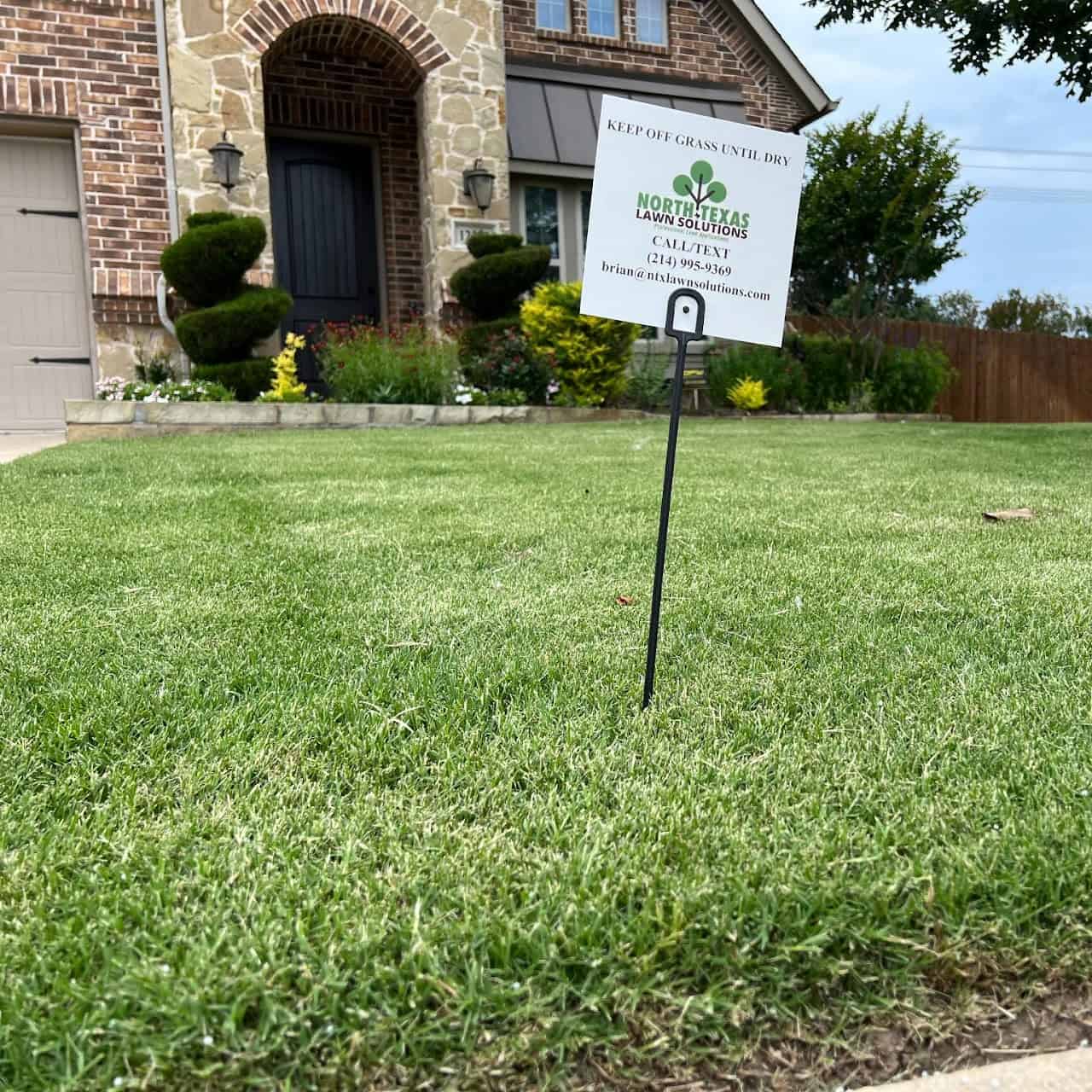
When to Call for Help
Call North Texas Lawn Solutions if you notice:
- Fire ant mounds multiplying across your lawn
- Brown patches appearing in summer that don't respond to watering
- Grass that lifts easily from the soil (grub damage)
- Sudden, rapid lawn damage (army worms)
- Yellowing grass spreading outward from sunny areas (chinch bugs)
- You're not sure what's causing the problem and need an expert opinion
Brian offers free lawn assessments and can diagnose pest problems on-site. You'll get honest answers about what's wrong, what treatment is needed, and what results to expect.
Call or text Brian: (214) 995-9369
Email: brian@ntxlawnsolutions.com
Service areas: Frisco, Little Elm, and surrounding North Texas communities
Licensed by Texas Department of Agriculture (#0823737)
1-Year Guarantee: If they come back, we treat again free.