
Mow first, wait 24-48 hours, then fertilize. This sequence prevents fertilizer burn, stops nutrient waste, and gives grass maximum absorption capacity without adding stress to freshly-cut grass blades.
The wait period matters because lawn mowing creates open wounds on grass blade tips. Fresh-cut St. Augustine and Bermuda grass experiences elevated stress levels immediately after cutting. Applying nitrogen-based fertilizer to wounded grass tissue increases burn risk by pulling moisture from plant cells faster than root systems can replace it. The 24-48 hour recovery window allows blade tips to seal and stomata regulation to stabilize before concentrated nutrients contact grass tissue.
Timing varies by fertilizer type. Granular fertilizers require the full 48-hour wait after watering in because particles must dissolve in soil before root hairs absorb nutrients. Liquid fertilizers shorten the post-application wait to 1-4 hours once grass blades dry because foliar feeding through leaf stomata happens immediately upon contact.
Here’s what you need to know about fertilization timing for St. Augustine and Bermuda grass in North Texas.
Texas A&M AgriLife Extension and professional lawn care operators follow this sequence: mow your lawn, wait 24-48 hours, then apply fertilizer.
When you cut grass, you create fresh wounds at each blade tip. Grass responds to mowing as a stress event by temporarily increasing water loss through exposed tissue and opening stomata to regulate temperature. Your lawn needs recovery time before concentrated nitrogen compounds contact stressed tissue.
Mowing before fertilizing also establishes proper grass height for nutrient absorption. St. Augustine grass performs best at 2.5-3.5 inches in North Texas heat. Bermuda grass thrives at 1-2 inches. Both heights give grass the surface area needed for granular fertilizer contact with soil and liquid fertilizer contact with leaf tissue.
This timing saves money. Bagging mowers remove undissolved granular fertilizer particles before root systems absorb them. Mulching mowers redistribute granules to random spots, creating dark green stripes next to nutrient-deficient patches. Mowing too soon after liquid fertilizer application removes grass blade sections that absorb nitrogen through stomata, sending nutrients into clippings instead of root systems.
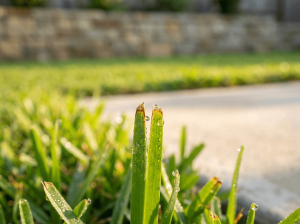
Grass blades contain stomata (microscopic pores) that open and close to regulate water vapor exchange and carbon dioxide intake. Professional mowing equipment cuts grass at approximately 3,000 RPM, creating clean cuts that still expose fresh plant tissue at blade tips. These wounds temporarily increase transpiration rates and make grass vulnerable to fertilizer burn.
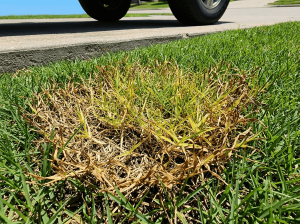
Fertilizer burn occurs when water-soluble nitrogen pulls moisture from grass cells faster than root hairs transport replacement water from soil. Fresh-cut grass with elevated stress levels and increased transpiration rates burns more readily than grass that completed its 24-48 hour recovery cycle.
North Texas heat intensifies this risk. When ambient temperatures exceed 95°F, grass already operates near its maximum stress threshold. Adding fertilizer immediately after mowing compounds heat stress with chemical stress, often resulting in brown patches that require three weeks of recovery.
The 24-48 hour wait allows wounded blade tips to form protective barriers through cell wall lignification. Stomata regulation returns to normal cycles. Root systems stabilize water uptake patterns. The lawn transitions from stress-response mode back to active growth, making it ready to process concentrated nutrients without tissue damage.
Brian has seen homeowners lose entire lawn sections from fertilizer burn caused by poor timing. A lawn that turns brown from nitrogen burn needs extensive recovery time, and applying additional fertilizer makes the problem worse by adding more stress to already-damaged tissue.
Fertilizer form determines both application method and mowing timing.
Granular fertilizer consists of solid particles containing nitrogen (N), phosphorus (P), and potassium (K) compounds that dissolve when water activates them. After spreading granular fertilizer with a broadcast spreader, you water the lawn to initiate dissolution and move nutrients into the soil profile where grass root hairs absorb them over days or weeks.
Granular products require 24-48 hours after watering in before mowing. This window allows particles to fully dissolve, prevents bag-up of undissolved granules, and gives you even nutrient distribution across the lawn. Slow-release granular fertilizers use polymer coatings or sulfur-coated urea that breaks down gradually, feeding lawns for 6-12 weeks. Mowing too soon disrupts this time-release mechanism.
Liquid fertilizer contains water-soluble nutrients already dissolved in liquid carriers. Application happens through pump sprayers or hose-end applicators. Nutrient absorption occurs through two pathways: foliar feeding (grass blades absorb nutrients through stomata within 1-4 hours) and root uptake (nutrients that reach soil get absorbed by root hairs over 12-24 hours).
Liquid products complete foliar absorption within 1-4 hours once grass blades dry to the touch. You can mow the same day once dry and absorption period has elapsed, but it’s recommended to wait 24 hrs before mowing. When temperatures exceed 100°F, apply liquid fertilizer before 10 AM to prevent heat stress and give you better stomatal absorption efficiency.
| Fertilizer Type | Primary Nutrient Delivery | Absorption Timeline | Wait Before Mowing |
|---|---|---|---|
| Granular (standard) | Root uptake from soil | 24-72 hours | 24-48 hours after watering in |
| Granular (slow-release) | Root uptake, time-released | 6-12 weeks | 24-48 hours after watering in |
| Liquid (quick-release) | Foliar feeding + root uptake | 1-4 hours (foliar), 12-24 hours (root) | 24 hours |
Understanding fertilizer chemistry prevents timing mistakes. Check product labels for NPK ratios (the three numbers like 15-5-10 representing nitrogen-phosphorus-potassium percentages) and application instructions. Granular products require the full wait period. Liquid products allow same-day mowing once absorption period has elapsed.
Little Elm, Frisco, Oak Point, and surrounding North Texas areas support two dominant warm-season grasses: St. Augustine and Bermuda. Each grass type requires specific mowing heights and fertilization timing.
St. Augustine grass works best at 2.5-3.5 inches in North Texas climate conditions. This grass species features broader leaf blades and slower vertical growth rates compared to Bermuda. Mow St. Augustine when blade height reaches 4 inches, cutting back to 3 inches to maintain the one-third rule (never remove more than one-third of blade height in a single mowing). This height protects shallow root systems from intense summer sun and helps St. Augustine compete against broadleaf weeds like dandelions and clover.
St. Augustine responds well to the mow-first fertilization sequence during active growing season (April through September). Apply nitrogen-based fertilizer at 0.5-1 pound of actual nitrogen per 1,000 square feet every 4-6 weeks during peak growth. St. Augustine tolerates North Texas heat but shows stress signals during extended 100°F+ periods. Heat stress symptoms include grayish tint to normally dark green blades and footprint impressions that remain visible for hours. Delay fertilization if heat stress appears until temperatures moderate or irrigation restores soil moisture.
Bermuda grass thrives at lower mowing heights between 1-2 inches. If we’re experiencing consistent 98°F+ temperatures you can increase this height gradually to 3 inches while still adhering to the ⅓ mowing rule. Bermuda features aggressive stolons (horizontal above-ground stems) and rhizomes (underground stems) that create dense turf when maintained at proper height. Bermuda’s fast vertical growth rate during North Texas summers often requires mowing twice per week during peak growth in June and July.
Bermuda’s heat tolerance and rapid growth make it more forgiving with fertilization timing, but the 24-48 hour rule still applies for best results. Mow first, wait, then fertilize. Bermuda’s quick growth cycle means you’ll reach the next mowing schedule sooner than St. Augustine lawns. Once granular fertilizer completes its 48-hour soil integration, subsequent mowing won’t remove nutrients. Liquid fertilizer on Bermuda allows same-day mowing once absorption period elapses.
North Texas climate requires location-specific timing because generic national lawn care advice assumes cool-season grasses like Kentucky bluegrass or tall fescue grown in northern states. Our warm-season grasses, extreme summer heat, and specific soil conditions create timing windows that differ significantly from regions with moderate climates.
Mowing immediately after fertilizer application creates three distinct problems: nutrient removal, uneven distribution, and financial waste.
Bagging mowers physically remove fertilizer granules. When you spread granular fertilizer and mow 12 hours later with a bagging attachment, the vacuum action pulls undissolved particles into the collection bag along with grass clippings. Those granules end up in yard waste bins instead of soil where root systems can access them. Testing shows bagging too soon after fertilization removes 20-30% of applied nutrients.
Mulching mowers redistribute fertilizer randomly. Mulching blades chop grass clippings and fertilizer granules together, then discharge this mixture across the lawn in patterns that don’t match your original broadcast spreader coverage. Areas that received proper fertilizer amounts now have excess nitrogen causing dark green growth. Previously covered sections now have nutrient gaps resulting in pale patches. The result: striped appearance with inconsistent color and growth rates.
Foliar-absorbed nutrients get cut away. Liquid fertilizers deliver nutrients through grass blade stomata. When you mow before foliar absorption completes (typically 1-4 hours), you remove the blade sections containing absorbed nitrogen, phosphorus, and potassium. Those nutrients leave your property as bagged clippings or mulched grass rather than moving into plant tissues and root systems.
Financial impact accumulates over the growing season. Professional fertilizer applications for typical North Texas lawns (5,000-8,000 square feet) cost based on square footage and product type. Wasting 20-30% of each application by mowing too soon means you’re paying for nutrients your lawn never receives. Over a seven-treatment annual program, that waste adds up to hundreds of dollars in lost fertilizer value.
If you already mowed too soon after fertilizing, take these corrective steps: Wait longer before your next fertilizer application to avoid compounding stress. Monitor for fertilizer burn symptoms including brown patches, crispy blade tips, or dark green stripes next to pale areas. If burn appears, water deeply (1-1.5 inches) to dilute excess nitrogen in affected soil zones. Don’t apply more fertilizer attempting to “fix” areas with light coverage. Document the timing mistake and adjust your schedule for the next application.
Grass clippings supply up to 25% of your lawn’s annual nitrogen requirements when left on the lawn through grasscycling, according to University of Minnesota Turf Extension research.
When you mow and leave clippings on the lawn instead of bagging them, those clippings decompose through microbial activity and release nitrogen, phosphorus, and potassium back into soil. This natural nutrient recycling reduces commercial fertilizer requirements by approximately 25%. Studies from Texas A&M AgriLife Extension show grasscycling can reduce annual fertilizer costs by one-quarter while maintaining equivalent lawn quality compared to bagging.
Should you bag or mulch when mowing before fertilization? Mulch clippings into the lawn. Bagging removes free nutrients your soil microbes would otherwise break down and make available to grass roots. You’re removing nitrogen and paying waste management fees to haul nutrients to compost facilities.
Exceptions: 1) If your grass becomes severely overgrown and you’re removing more than one-third of blade height, bag the excess heavy clippings to prevent smothering. Thick clumps of clippings block sunlight from reaching grass underneath and create anaerobic conditions that kill turf. After catching up on height, return to regular mulching once you’re back on the one-third rule. 2) If a severe weed infestation is present and weeds have overtaken your lawn, bag clippings during mowing to help reduce seed spread until proper weed management practices (such as targeted herbicide applications and improved cultural practices) are implemented. 3) If noticeable signs of lawn disease are present (such as gray leaf spot, brown patch, or yellow patch), bag clippings during mowing to help limit disease spread until appropriate fungicide applications are made and cultural conditions are improved.
Never bag after fertilizing. If you applied fertilizer and then realize you need to mow (poor timing, but it happens), switch to mulching mode at minimum. Bagging after fertilizer application removes both the commercial nutrients you just spread and the natural clipping nutrients your lawn generates through decomposition.
Grasscycling works best when you follow the one-third mowing rule consistently. For St. Augustine maintained at 3-inch height, mow when grass reaches 3.5 - 4 inches. For Bermuda maintained at 1.5-inch height, mow when it reaches 2 inches.
Clipping decomposition accelerates during warm weather, aligning perfectly with North Texas fertilization season from April through September. Summer heat and soil moisture create ideal conditions for microbial activity that breaks down clippings and releases nutrients. The nitrogen your decomposing grass clippings provide supplements to commercial fertilizer applications and reduces total fertilizer requirements for healthy turf.
The fertilization sequence is straightforward: mow first, wait 24-48 hours, fertilize, then make sure you water the application in before your next mowing. Granular fertilizer needs the full 48-hour soil integration period. Liquid fertilizer shortens the post-application wait to 1-4 hours once grass blades dry to the touch.
Fertilizer form determines timing more than most North Texas homeowners realize. Granular products must dissolve in soil moisture before grass root hairs absorb water-soluble nutrients. Liquid products deliver nutrients through leaf stomata within hours of application. Using correct timing for your specific product type prevents waste and prevents fertilizer burn damage.
St. Augustine grass needs mowing heights between 2.5-3.5 inches and shows heat stress more readily during extended 100°F+ periods. Bermuda grass tolerates lower cuts at 1-2 inches and thrives in North Texas summer heat that stresses other grass types. If we’re experiencing consistent 98°F+ temperatures and you’re seeing heat stress in the lawn you can increase this height gradually to 3 inches while still adhering to the ⅓ mowing rule. Both grasses benefit from the mow-first timing rule, but their different growth rates create different mowing frequency requirements.
Little Elm and Frisco experience extreme summer heat. When temperatures exceed 100°F for consecutive days, proper fertilization timing alone can’t overcome inadequate irrigation. Make sure your lawn has adequate soil moisture before and after fertilizer application, especially during July and August when heat stress peaks.
Proper timing protects your fertilizer investment. Every granule removed by premature mowing represents wasted money. Every grass blade section cut away before liquid nutrient absorption completes is nutrition lost. The 24-48 hour wait period for granular products and 1-4 hour wait for liquid products protects the money you spent on lawn nutrition.
Our fertilization & weed control program removes timing complexity entirely. We apply the right products and adjust for weather and grass conditions specific to North Texas. Seven treatments per year, timed for St. Augustine and Bermuda performance in our climate, with direct communication when questions arise.
Brian grew up in North Texas. He understands St. Augustine and Bermuda grass biology, knows our summer heat patterns and soil conditions, and has seen what happens when fertilization timing goes wrong. That local expertise shows up in how we schedule treatments and communicate with customers about their specific lawn needs.
Ready to stop guessing about fertilization timing? Call or text (214) 995-9369 for a free quote on our fertilization & weed control program for Little Elm and Frisco lawns. We’ll handle the timing, you’ll see the results.