

The best time to fertilize your lawn in North Texas is April to early May for your first spring application, and August to September for your last application of the year. These dates depend on soil temperature reaching 65°F at 4-inch depth, which triggers warm-season grasses like Bermuda grass and St. Augustine grass to actively absorb nitrogen, phosphorus, and potassium.
Timing matters more than most people realize. Fertilize too early, and you’re feeding winter annual weeds like henbit and chickweed instead of grass because your lawn remains dormant below 65°F soil temperature. Fertilize too late in fall (after early October), and you’re forcing new blade growth right before November frost hits Little Elm and Frisco. Either way, you’re wasting money and potentially harming your lawn’s root system.
This guide covers North Texas-specific fertilization timing for Little Elm, Frisco, Oak Point, Cross Roads, and the Dallas-Fort Worth metro. You’ll learn when to fertilize Bermuda grass, when to fertilize St. Augustine grass, and how to read soil temperature and visual cues instead of relying on generic calendar dates that don’t account for our unpredictable spring weather patterns.
Brian grew up in North Texas and has applied thousands of fertilizer treatments across Little Elm and Frisco lawns since starting North Texas Lawn Solutions. The timing recommendations here reflect actual North Texas clay soil conditions and Denton County climate patterns, not generic advice copied from national lawn care guides written for cool-season grass regions.
Fertilizing before soil reaches 65°F at 4-inch depth feeds winter weeds like henbit and chickweed instead of your grass. Your lawn stays dormant below this temperature, so early applications waste nutrients and create weed problems that need extra herbicide treatments to fix.
St. Augustine grass needs 2-3 lbs of nitrogen per year with iron supplementation. Bermuda grass is a heavier feeder requiring 4-6 lbs per year. Zoysia sits in between at 2-4 lbs. Using the wrong fertilization schedule for your grass type wastes money and can cause problems.
April to early May marks your first spring fertilization window for warm-season grasses in the Dallas-Fort Worth metro. September is your last application. These months align with soil temperature thresholds rather than arbitrary calendar dates that ignore local weather variability.
Soil temperature at 4-inch depth is the key trigger. When soil reaches 65°F at this depth, warm-season grasses like Bermuda grass and St. Augustine grass absorb nitrogen efficiently through active root systems. Before that 65°F threshold, grass roots remain dormant regardless of what the calendar says or what neighbors are doing. In Little Elm and Frisco, soil temperatures typically hit 65°F in mid-April, though late freezes can delay this by 2-3 weeks some years.
A simpler visual cue is the “2-3 mowings rule” that Brian uses with customers. Wait until you’ve mowed your lawn 2-3 times in spring before applying fertilizer. This confirms your grass is actively growing through the entire root zone, not just showing a hint of green from warm afternoon sun.
You don't need a soil thermometer to know when your grass is ready. If you've mowed your lawn 2-3 times and grass height is actively increasing between mowings, your root systems are functioning and ready to absorb fertilizer nutrients.
North Texas Fertilization Calendar:
| Month | Action | Soil Temperature | Notes |
|---|---|---|---|
| April-May | First spring application | 65°F+ | Wait for 2-3 mowings |
| June | Optional second application | 75°F+ | Only if needed, 4-6 weeks after spring |
| September | Most important application | 70-75°F | 4-6 weeks before frost |
| Early October | Last application window | 65-70°F | Final chance before dormancy |
| November-March | No fertilization | Below 65°F | Grass dormant |
The Dallas-Fort Worth metro typically sees first frost around November 16 based on National Weather Service data for DFW Airport. Your fall fertilization needs to happen at least 4-6 weeks before that date to allow grass to absorb nutrients and strengthen root systems before going dormant through winter.
Spring fertilization starts when soil temperature confirms active root growth in warm-season grasses. In North Texas clay soils, this means waiting until mid to late April in most years.
Check soil temperature at 4-inch depth using a soil thermometer available at any garden center for $10-15. Insert the probe 4 inches into soil in several spots across your lawn (avoid hot spots near driveways or south walls that warm faster), take readings at the same time of day for 3-4 consecutive days, and look for consistent 65°F or higher temperatures before applying fertilizer.
The 2-3 mowings rule provides another reliable checkpoint. When you’ve mowed your lawn 2-3 times and grass height is actively increasing between mowings, root systems are functioning and can process fertilizer nitrogen into chlorophyll for blade growth.
Application rate for spring is 0.5 to 1 pound of nitrogen per 1,000 square feet. If you apply a second treatment in June, space it 4-6 weeks after your spring application. This 4-6 week interval allows grass to use the first application before adding more nutrients that could cause fertilizer burn.
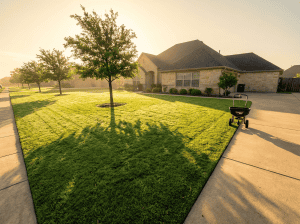
Don’t fertilize before grass greens up across your entire lawn. Dormant grass cannot absorb nitrogen until soil temperatures reach 65°F at root depth, so early applications waste nutrients and feed winter weeds like chickweed and henbit instead.
Don’t apply during late cold snaps. North Texas weather can bring freezing temperatures in early April some years. If a cold front drops soil temperature below 60°F after you thought spring had arrived, wait for temperatures to stabilize before fertilizing.
Don’t rush the calendar just because neighbors are fertilizing. Some years greenup happens in early April. Other years it’s late April. Soil temperature tells you when your specific lawn is ready, which matters more than what worked last year or what generic schedules recommend.
Bermuda grass typically greens up 1-2 weeks before St. Augustine grass in North Texas because Bermuda requires lower soil temperatures for active growth. If you have St. Augustine grass, you’ll wait longer than Bermuda lawns in your neighborhood. Shaded areas under oak trees or along north-facing walls green up even later, sometimes a full week after sun-exposed sections in your yard.
Fertilizing before greenup wastes nutrients because dormant grass cannot absorb nitrogen until soil temperatures reach 65°F at 4-inch depth where root systems become active. Brian has seen homeowners apply early March applications that fed henbit and chickweed instead of grass, creating a weed problem that required extra post-emergent herbicide treatments to fix.
Summer fertilization is optional for most North Texas lawns during June, July, and August. A second application in June, spaced 4-6 weeks after your spring treatment, can maintain color and density if your lawn receives heavy foot traffic from kids or dogs, or if you want maximum thickness for curb appeal.
Heat stress becomes the limiting factor for nutrient absorption. North Texas regularly sees 95-105°F air temperatures in July and August, which pushes soil temperatures above 90°F. During extreme heat, grass enters survival mode and slows growth to conserve water. Adding fertilizer during peak stress forces grass to process nutrients when it’s already struggling with heat and water demands.
Skip summer fertilization during drought conditions. If Frisco or Little Elm has water restrictions in place from NTMWD (North Texas Municipal Water District), or if your lawn shows heat stress symptoms like blue-gray tint or footprints that don’t spring back, don’t fertilize. The combination of heat stress and fertilizer salts can burn grass by drawing moisture away from root systems.
Slow-release fertilizer formulas reduce burn risk if you do fertilize in summer. These products release nitrogen gradually over 6-8 weeks through coated granules rather than flooding grass with nitrogen all at once. The gradual release matches grass uptake capacity better during stressful conditions when root activity is limited.
Lighter application rates work better in summer heat. Instead of 1 pound of nitrogen per 1,000 square feet, drop to 0.5 pounds. This provides maintenance feeding without overwhelming grass during July and August temperatures.
Yellowing despite adequate water indicates nitrogen deficiency. If you’re watering properly (1-1.5 inches per week) but grass turns pale yellow-green instead of deep green, a light summer application can help correct the deficiency.
Slow growth or thin patches suggest nutrient depletion. Lawns with heavy foot traffic, dogs, or active kids may use nutrients faster than spring applications can sustain through summer months.
Pale green color differs from the vibrant dark green color you saw in April and May. Some summer fading is normal during extreme heat above 100°F, but if neighbors’ lawns look substantially darker than yours, you may need a light feeding with slow-release nitrogen.
Slow-release nitrogen formulas release nutrients gradually over 6-8 weeks through polymer-coated granules, reducing burn risk during North Texas summer heat. These formulas cost more than quick-release options like ammonium sulfate, but the burn insurance is worth it when temperatures hit 100°F and soil moisture is limited.
September is the most forgotten fertilization month for North Texas lawns by homeowners. This application matters more than spring, summer, or any other treatment you apply all year because it targets root development when grass prioritizes underground growth over blade production.
Fall fertilization strengthens root systems before winter dormancy, which improves spring greenup speed and drought tolerance the following summer. While grass blades slow visible growth as temperatures cool, roots continue growing aggressively underground through September and October when soil temperatures remain in the 65-75°F range ideal for root development.
Timing is critical for root nutrient absorption. Apply 4-6 weeks before first frost, which means early September for most of the Dallas-Fort Worth metro. The November 16 average first frost date for DFW Airport gives you until late September or early October at the latest for your final application before winter dormancy.
Application rate for fall should be a full 0.25 - 0.5 pound of nitrogen per 1,000 square feet. Reduce the rate slightly compared to other fertilizations earlier in the year. Total annual nitrogen amounts ranging from 3 to 5 lbs of nitrogen per 1,000 square feet for high quality lawns. Those nutrients feed root development you can’t see that determines next year’s performance.
Is it okay to fertilize in September? Yes, September is the most forgotten month for North Texas lawns. This application provides nutrients for root growth and prepares grass for winter stress and spring recovery by building carbohydrate reserves in root systems.
Is October too late to fertilize? Early October is fine for fall fertilization. Late October is too late before the November 16 frost date in the Dallas-Fort Worth area. Late fertilization forces tender new blade growth that frost will damage.
Fall fertilization coordinates with pre-emergent weed control timing for winter annual weeds. Coordinating fertilization with pre-emergent weed control applications prevents poa annua (bluegrass) and other weeds while feeding your grass. The same September application window works for both treatments, making fall the most efficient time to prepare your lawn for the next growing season.
Not sure when to schedule your fall treatment? We handle the timing for you, applying based on actual soil temperatures from weather forecasts and our own measurements because we’re local. Call or text (214) 995-9369 to lock in your September application before our schedule fills. Want help with weeds too? See our Frisco weed treatment program.
While grass blades slow visible growth in fall, roots continue growing aggressively underground through September and October. This fall feeding strengthens root systems before winter dormancy, improves spring greenup speed, and builds drought tolerance for next summer. Don't skip this treatment.
Bermuda grass, St. Augustine grass, and Zoysia grass have different nitrogen requirements and timing sensitivities. Knowing your grass type determines application rates and schedules throughout the growing season.
St. Augustine grass needs fertilization about 3 weeks after greenup, typically late April in Little Elm and Frisco. This grass greens up later than Bermuda grass because St. Augustine requires higher soil temperatures (65-70°F) for active root growth, so don’t rush spring applications just because your neighbor’s Bermuda lawn is already green.
Annual nitrogen requirements for St. Augustine grass run 2-3 pounds per 1,000 square feet. That’s lower than Bermuda grass requirements, which means fewer applications or lighter rates per treatment. Three applications per year (spring, optional summer, fall) usually provide adequate nutrition for healthy St. Augustine grass in North Texas.
Iron supplementation matters for St. Augustine grass more than other grass types. North Texas clay soils have high pH (7.5-8.5), which limits iron availability and causes yellowing in St. Augustine lawns despite adequate nitrogen fertilization. Look for fertilizers with an 3-1-2 NPK ratio plus added iron specifically formulated for St. Augustine grass to prevent chlorosis.
Shade tolerance affects timing for St. Augustine grass. St. Augustine handles shade better than Bermuda grass, which is why many North Texas homeowners choose it for yards with large oak trees or cedar elms. However, shaded areas green up later in spring, sometimes 7-10 days after sun-exposed sections. Wait for full greenup across your entire lawn before fertilizing, or you’ll waste nutrients on dormant grass in shaded zones under tree canopies.
What is the best fertilizer for St. Augustine grass? It’s always recommended to get a soil test but in general a 3-1-2 NPK ratio with added iron works best for North Texas St. Augustine grass. The iron prevents chlorosis (yellowing) that occurs in our alkaline clay soils even when nitrogen levels are adequate.
Bermuda grass is a more aggressive feeder than St. Augustine grass. Annual nitrogen requirements run 4-6 pounds per 1,000 square feet, which translates to more frequent applications during the April through September growing season.
Bermuda grass can handle earlier spring fertilization. Once soil consistently is 65°F, or the lawn has been mowed 2-3 times, Bermuda is ready to feed through active root systems. You’ll see greenup faster than St. Augustine grass, usually by early to mid-April in normal years without late freezes.
Application frequency increases with Bermuda grass. Space treatments every 4-6 weeks during the growing season (April through September) to maintain color and density. That typically means 4-5 applications total rather than the 3 applications St. Augustine grass needs.
In the absence of a soil test the NPK ratio for Bermuda grass should also be the 3-1-2 ratio, but with higher percentages by weight than St. Augustine formulas. This feeds Bermuda’s aggressive growth habit without overfeeding to the point of excessive mowing every 4-5 days.
Zoysia grass is a moderate feeder, sitting between St. Augustine grass and Bermuda grass in nitrogen requirements. Annual needs run 2-4 pounds per 1,000 square feet.
Spring and fall applications usually provide sufficient nutrition for Zoysia grass. This grass doesn’t require the frequent summer feedings that Bermuda grass demands for best color and density.
Slower greenup than Bermuda grass but faster than St. Augustine characterizes Zoysia grass in spring. Wait until the lawn has been mowed twice before fertilizing, even if Bermuda lawns in your neighborhood greened up weeks earlier. Zoysia takes its time transitioning from dormancy due to lower metabolic activity.
St. Augustine vs. Bermuda Fertilization Needs:
| Grass Type | Annual Nitrogen | NPK Ratio | Applications per Year | Special Needs |
|---|---|---|---|---|
| St. Augustine | 2-4 lbs per 1,000 sq ft | 8-2-12 | 3 (spring, optional summer, fall) | Iron supplementation for chlorosis |
| Bermuda | 3-4 lbs per 1,000 sq ft | 15-5-10 | 4-5 (every 4-5 weeks Apr-Sept) | Higher nitrogen for aggressive growth |
| Zoysia | 2-3 lbs per 1,000 sq ft | 10-5-10 | 2-3 (spring, fall, optional summer) | Slow greenup, late spring timing |
*In the absence of a soil test these are general ratios that require different nitrogen percentages by weight
St. Augustine grass requires iron supplementation in North Texas because high-pH clay soils (7.5-8.5) limit iron availability through chemical binding, causing yellowing despite adequate nitrogen. You’ll see this as interveinal chlorosis, where leaf veins stay green but tissue between veins turns yellow. Iron sulfate supplements or iron-fortified fertilizers formulas may correct this within 7-10 days.
Soil temperature at 4-inch depth determines when grass can absorb nutrients through active root systems. A soil thermometer gives you precise readings. Insert the probe 4 inches into soil in several spots across your lawn (avoid hot spots near driveways or south walls), take readings at the same time of day for 3-4 consecutive days, and look for consistent 65°F or higher temperatures before applying fertilizer.
Visual cues provide confirmation without equipment. Watch for grass color change from brown to green across your entire lawn, not just scattered early patches near foundations or paved surfaces that warm faster. Full greenup means root systems are active throughout your yard.
Mowing frequency indicates growth rate. When you’re mowing every 5-7 days and grass height increases noticeably between mowings, you know grass is actively growing and processing nutrients through photosynthesis.
North Texas weather varies significantly year to year, making soil temperature monitoring more reliable than calendar dates for fertilization timing. Some springs arrive early, with 65°F soil temperatures in early April at 4-inch depth. Other years late freezes push greenup into late April or early May. Calendar dates can’t account for this variability, but soil temperature always tells the truth about root activity.
Soil temperature monitoring apps and online resources make tracking easier without buying a thermometer. Texas A&M AgriLife Extension Service provides soil temperature data for the Dallas-Fort Worth area through their online monitoring network. Local weather stations like WFAA sometimes include soil temperature in their agricultural forecasts during spring.
Fertilizing too early, before soil temperature reaches 65°F at 4-inch depth, wastes money and feeds winter weeds instead of grass. Brian has seen homeowners apply early March treatments that did nothing except green up henbit and chickweed that compete with grass.
Over-fertilization causes fertilizer burn. Excess salts from nitrogen draw moisture away from grass roots through osmotic pressure, creating yellow or brown streaked patterns across your lawn. This happens most often when homeowners apply more than 1 pound of nitrogen per 1,000 square feet in a single application, or when fertilizer sits on wet grass blades instead of reaching soil.
Fertilizing during drought or heat stress compounds problems. When grass is already stressed from lack of water or extreme heat above 100°F, adding fertilizer salts makes dehydration worse through increased salt concentration in the root zone. Wait for adequate soil moisture and cooler temperatures before fertilizing during summer months.
Skipping fall application is the biggest missed opportunity. Many homeowners fertilize in spring and summer, then stop when grass growth slows in fall. They miss the most important application for root development and next year’s performance because they can’t see the underground growth happening.
Wrong fertilizer type for the season creates problems. Quick-release nitrogen in July can burn grass during 100°F heat. Slow-release formulas work better in summer. Similarly, using a winterizing fertilizer (high potassium) in spring doesn’t match grass needs at that time of year when nitrogen drives greenup.
Not watering after application leaves fertilizer granules sitting on grass blades where they can burn. Ideally water granular fertilizers within 24 hours of application to move nutrients into soil where roots can access them through water uptake.
The first step is to stop or pause fertilizing. Water heavily to dilute salts if you’ve over-fertilized. Apply 1-2 inches of water through multiple irrigation cycles to flush excess nitrogen deeper into soil, away from the root zone where it’s causing damage through salt burn. After the lawn has been flushed (do not create runoff) resume regular watering.
Don’t mow immediately after discovering burn. Let grass recover for 7-10 days before cutting to avoid additional stress. Mowing stressed grass compounds damage by removing remaining healthy blade tissue. Raise your lawn mower height, never remove more than ⅓ of the grass leag at a time. Always use a sharpened mower blade.
Expect recovery in 2-3 weeks for minor burn showing light yellowing. Severe over-fertilization can take 4-6 weeks to recover, and some grass may die and require reseeding. Over-fertilization causes nitrogen burn because excess salts draw moisture away from grass roots through osmotic pressure, creating yellow or brown streaked patterns where salt concentration is highest.
Slow-release fertilizers provide nutrients gradually over 6-8 weeks through polymer-coated granules or sulfur-coated urea. Coated granules break down slowly, releasing nitrogen in small amounts as grass can use it through active growth. This reduces burn risk, especially during North Texas summer heat when soil temperatures exceed 90°F.
Quick-release fertilizers deliver nutrients within 2-4 weeks through water-soluble nitrogen sources like ammonium sulfate or urea. You’ll see results faster, with grass greening up within 3-5 days of application. However, the rapid nutrient availability increases burn risk if you over-apply or fertilize during stress.
When to use slow-release: Summer applications during July and August heat, sandy soils that leach nutrients quickly, lawns prone to burning from salt sensitivity, and situations where you want longer intervals between treatments to reduce labor.
When to use quick-release: Spring applications when you want rapid greenup in April, correcting severe nutrient deficiency showing yellowing, spot-treating thin areas that need immediate help, and late fall applications where you want nutrients available before grass goes dormant in November.
Cost versus convenience creates trade-offs. Slow-release fertilizers cost more per bag ($30-50 for 15,000 sq ft coverage) but require fewer applications per year. Quick-release costs less upfront ($15-25 per bag) but needs more frequent reapplication to maintain results through the growing season.
What fertilizer to use in September in Texas? Slow-release with balanced NPK or slightly higher potassium (the third number in NPK ratio) supports winterization. A 15-5-15 or similar ratio works well for fall applications, providing nitrogen for root growth plus potassium for cold hardiness before winter dormancy.
Slow-release fertilizers reduce burn risk during North Texas heat because nutrients release gradually over 6-8 weeks rather than all at once through immediate water dissolution. When temperatures hit 100°F in July and August and soil moisture is limited, this gradual release matches grass uptake capacity better than flooding the lawn with quick-release nitrogen that grass can’t process fast enough.
Your North Texas lawn needs fertilization at four key points during the year. Here’s your quick reference timeline based on soil temperature and grass type:
April/May: First application after 2-3 mowings and soil temperature reaches 65°F at 4-inch depth. This jump-starts spring growth and green color through nitrogen uptake.
June: Optional second application if maintaining maximum density or your lawn receives heavy use from kids, dogs, or frequent entertaining. Skip this if spring fertilization is still showing good color, or if extreme heat and drought have set in.
July: Optional third application if trying to maintain the high quality lawn. Avoid fast release nitrogen, and may need increased iron to maintain color.
August/September: Most important application of the year for root development. This feeding strengthens root systems before dormancy and sets up next spring’s performance through carbohydrate storage. Don’t skip this treatment.
October: Last chance before dormancy. Early October is fine for Bermuda grass and St. Augustine grass, late October is too late before November frost risks damage to new growth.
November-March: No fertilization needed during winter dormancy. Grass is dormant and cannot absorb nutrients when soil temperature drops below 65°F. Any application during this window feeds winter weeds instead of grass and may increase the risk of disease and winter kill.
Your lawn gets nutrients exactly when it needs them with our 7-treatment annual program designed for Little Elm, Frisco, Oak Point, and Cross Roads. We monitor soil temperatures from Texas A&M AgriLife Extension monitoring stations and adjust timing based on actual North Texas weather patterns, not generic calendar schedules. North Texas Lawn Solutions offers a 7-treatment annual fertilization program designed specifically for Little Elm and Frisco lawns, removing the guesswork from timing, product selection, and application rates. See how that timing works in practice with our Little Elm fertilization schedule.
When you call with a question about your lawn, you talk directly to Brian, who knows your neighborhood and your grass type. No call centers, no generic scripts, just local expertise from someone who grew up in North Texas and understands what our lawns need throughout the growing season.
Call or text (214) 995-9369 for a free quote on our fertilization program. Your lawn deserves nutrients at the right time, not when a national company’s calendar says to apply.
🎯
Our 7-treatment annual program applies fertilizer based on actual soil temperatures and North Texas weather patterns, not generic calendar schedules. You talk directly to Brian, who knows your neighborhood and grass type.
Call or text: (214) 995-9369
Free quote for Little Elm, Frisco, Oak Point, Cross Roads, and Lakewood Village
Frequently Asked Questions
What months should I fertilize my lawn in Texas? April or May for your first spring application when soil reaches 65°F, an optional June and July treatment if needed for density, September for your most critical application targeting root development. November through March requires no fertilization because warm-season grasses like Bermuda grass and St. Augustine grass are dormant when soil temperature drops below 65°F.
Is it okay to fertilize in September? Yes, September is the single most important fertilization month for North Texas lawns. This application strengthens root systems before winter dormancy, improves spring greenup speed, and builds drought tolerance for the following summer through enhanced root development.
Is October too late to fertilize? Early October is fine for a final fertilization before dormancy. Late October is too late for typical November 16 first frost date in the Dallas-Fort Worth metro. After that, fertilization forces tender growth that frost will damage through ice crystal formation in new blade tissue.
When should I fertilize St. Augustine grass in Texas? Wait until about 3 weeks after greenup, typically late April in North Texas. St. Augustine grass greens up later than Bermuda grass because it requires higher soil temperatures, and shaded areas under oak trees or cedar elms may take another week beyond sun-exposed sections. Apply when your entire lawn shows active growth.
What is the best fertilizer for St. Augustine grass? In the absence of a soil test, stick with the 3-1-2 NPK ratio with added iron works best for North Texas St. Augustine lawns. The iron prevents yellowing (chlorosis) that occurs in our alkaline clay soils (pH 7.5-8.5) even when nitrogen levels are adequate for blade growth.
What fertilizer should I use in September in Texas? Slow-release formulas with balanced NPK or slightly higher potassium (15-5-15 or similar) work best for fall applications. The slow release provides sustained nutrition for root growth over 6-8 weeks, while potassium improves cold hardiness before winter dormancy in November.